
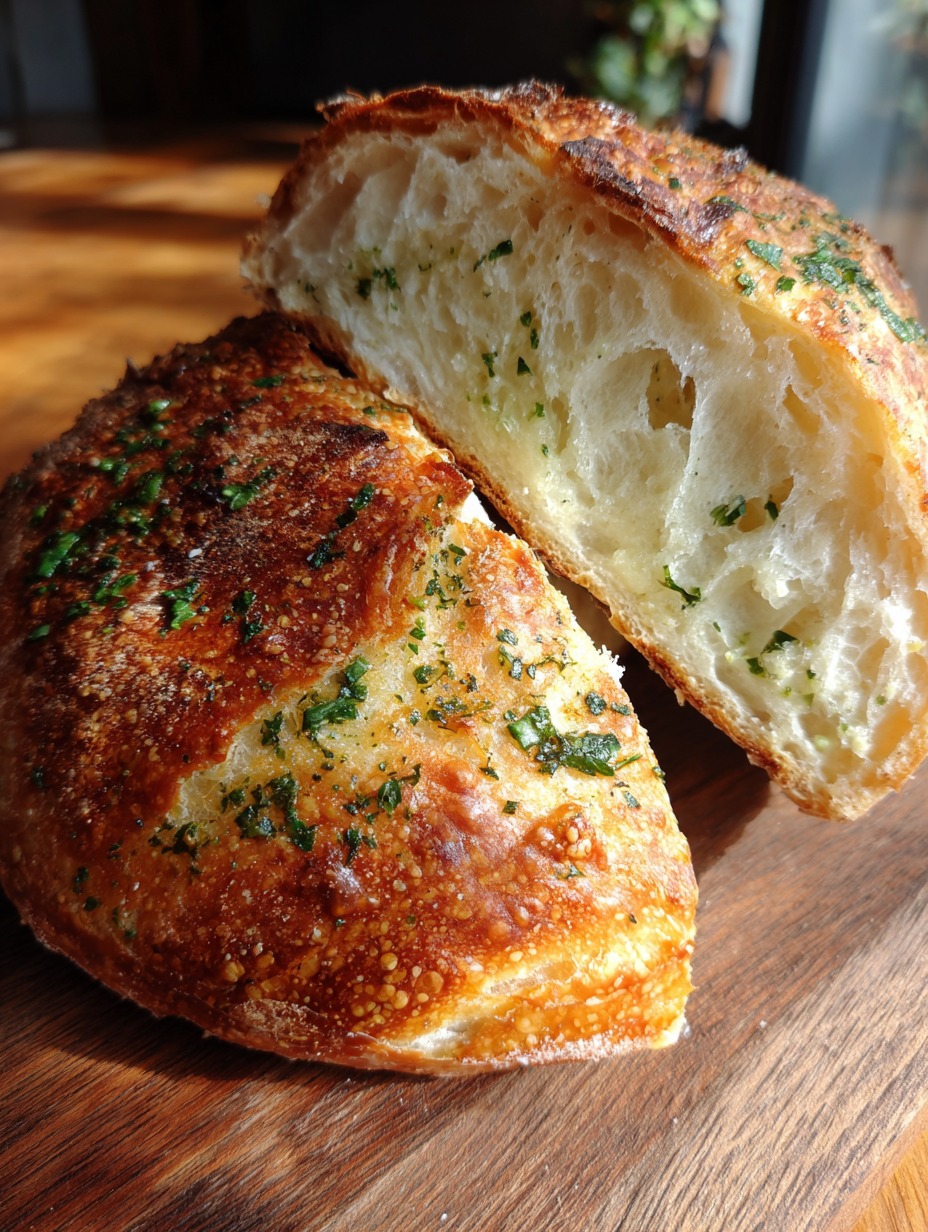
Rustic Garlic and Herb Sourdough Loaf
This rustic garlic and herb sourdough loaf is a warm and comforting homemade bread that feels like a hug from the kitchen. It is made with natural sourdough starter and flavored gently with garlic and dried herbs to create a loaf that smells amazing and tastes even better. This recipe is all about slowing down and enjoying the simple process of bread making. You mix simple ingredients let time do the magic and end up with a beautiful loaf that has a crisp crust and soft chewy inside. It is the kind of bread that makes your home feel cozy and welcoming.
People love this recipe because it brings joy and pride. Baking sourdough bread feels special because you are working with a living starter and watching it grow and transform. The garlic and herb flavor makes the loaf extra comforting and perfect for everyday meals. Many people enjoy slicing this bread warm and spreading butter on it or dipping it into soup. The smell alone makes people fall in love with it. It also feels rewarding to bake something from scratch using simple ingredients and patience.
This bread is perfect to make when you want to relax and enjoy the process of cooking. It is also great for sharing with family and friends because it feels homemade and thoughtful. Some people make it on weekends when they have more time while others bake it for special meals or gatherings. It can support a balanced lifestyle by using fermented dough which many people find easier to digest. Whether you bake it for comfort taste or the joy of learning something new this rustic loaf brings happiness in every bite.
Ingredients You Will Need
Active sourdough starter 1 cup
All purpose flour 3 and a half cups
Warm water 1 and a quarter cups
Salt 2 teaspoons
Garlic cloves minced 4 cloves
Dried mixed herbs 2 teaspoons
Olive oil 1 tablespoon
Step by Step Method
Start by making sure your sourdough starter is active and bubbly. Feed it a few hours before you plan to bake so it becomes strong and ready. This helps the bread rise well and develop good flavor.
Take a large mixing bowl and add the sourdough starter and warm water. Stir gently with a spoon until they are well combined. The mixture should look milky and smooth.
Add the flour to the bowl a little at a time. Mix slowly using a spoon or your hands until a rough dough forms. Make sure there are no dry patches of flour left in the bowl.
Once the dough comes together let it rest for thirty minutes. This resting time helps the flour absorb water and makes the dough easier to work with later.
After resting add the salt minced garlic dried herbs and olive oil to the dough. Mix everything gently until all ingredients are evenly spread throughout the dough.
Begin kneading the dough inside the bowl or on a clean surface. Use gentle folding and stretching motions. Knead for about five to seven minutes until the dough feels smooth and elastic.
Place the dough back into the bowl and cover it with a clean towel. Let it rest at room temperature for four to six hours. During this time perform stretch and fold actions every hour. To do this gently stretch one side of the dough and fold it over itself. Rotate the bowl and repeat. This helps build strength in the dough.
When the dough has risen and looks puffy shape it into a round loaf. Place it on a floured surface and gently tuck the edges underneath to create tension on the surface.
Line a bowl with a clean cloth and dust it with flour. Place the shaped dough into the bowl seam side up. Cover and let it rest in the fridge overnight or for at least eight hours.
The next day preheat your oven to a very hot temperature around two hundred thirty degrees Celsius. Place a heavy pot with a lid inside the oven to heat as well.
Once the oven is hot carefully take the pot out and place the dough inside seam side down. You can score the top of the dough with a sharp knife to help it expand.
Cover the pot with the lid and bake for twenty minutes. Then remove the lid and bake for another twenty five minutes until the crust is deep golden and crisp.
Take the bread out of the oven and let it cool on a rack for at least one hour before slicing. This helps the inside finish cooking and improves texture.
Why This Recipe Is Special
This recipe is special because it combines traditional sourdough baking with comforting garlic and herb flavors. The fermentation process helps develop a deep taste that feels rich and satisfying. Many people find sourdough easier to digest because of the natural fermentation.
The garlic and herbs add warmth and aroma without overpowering the bread. This makes it perfect for many meals from breakfast to dinner. It pairs well with soups salads and spreads.
Making this bread also helps build patience and confidence in the kitchen. It teaches you to slow down and enjoy the process. The result is a loaf that feels homemade and nourishing both for the body and the heart.
Extra Tips for Better Taste
Use fresh garlic for stronger flavor or roasted garlic for a sweeter taste.
You can experiment with different herbs like rosemary thyme or oregano depending on your preference.
Let the bread cool completely before slicing to get the best texture.
Store the bread wrapped in a cloth to keep the crust crisp.
If you like a softer crust brush the loaf lightly with olive oil after baking.
Final Thoughts
Rustic garlic and herb sourdough loaf is a beautiful bread that brings comfort and joy. It is perfect for beginners who want to learn sourdough baking in a simple way. The flavors are gentle and welcoming and the process feels rewarding. Baking this bread can become a calming ritual that fills your home with warmth. Once you bake it you may find yourself coming back to this recipe again and again.
Nutrition Details
Nutrition values are approximate and based on one slice of bread.
Calories 180
Protein 6 grams
Fat 3 grams
Carbohydrates 34 grams
Other nutrition notes
Contains natural fermentation
Provides energy and fiber
Low in added fats
Disclaimer
This recipe is shared for general information only. Everyone’s body is different and may react differently to foods. Results and digestion can vary from person to person. Always listen to your body and seek professional advice if needed.
